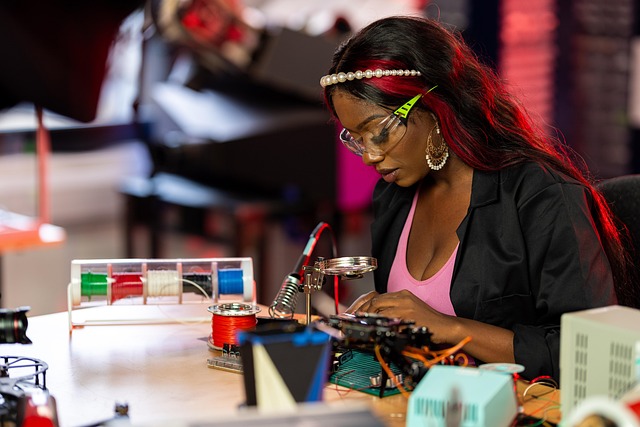
The Auburn Hospital Lab in Fort Wayne-Huntington-Auburn is a leader in advanced medical technology, integrating automation, state-of-the-art research labs, and software for efficient patient care and accurate diagnoses. This technological excellence makes it a top choice for lab work in the region, enhancing local healthcare. The robust network of labs in the area adheres to CLIA standards, offering diverse clinical testing capabilities. Innovation, driven by advanced automation and genetic testing technologies, ensures Auburn Hospital stays ahead of industry trends and meets modern healthcare demands. By embracing digital design software, 3D printing, and electronic data capture systems, Fort Wayne's labs aim to revolutionize healthcare delivery globally while maintaining quality assurance through national standards like CLIA.
In today’s healthcare landscape, the role of laboratory technology is more pivotal than ever before. Accurate diagnostics and effective patient care heavily rely on the precision and efficiency of lab work—a crucial aspect often unseen yet indispensable in Fort Wayne-Huntington-Auburn. This article delves into the cutting-edge technologies transforming hospital labs, specifically exploring advancements that enhance testing capabilities and patient outcomes. By examining these innovations, we aim to illuminate how hospitals in our region are staying at the forefront of medical progress, ensuring top-tier Find Lab Work In Fort Wayne-huntington-auburn for all.
- Auburn Hospital Lab: Advanced Technology Overview
- Understanding Laboratory Services in Fort Wayne-Huntington-Auburn
- The Role of Innovation in Lab Work Efficiency
- Exploring Modern Equipment for Accurate Diagnosis
- Enhancing Patient Care Through Lab Advancements
- Future Trends: What to Expect in Auburn's Lab Tech
Auburn Hospital Lab: Advanced Technology Overview

The Auburn Hospital Lab stands as a beacon of advanced medical technology, seamlessly integrating innovative solutions to enhance diagnostic precision and patient care in Fort Wayne-Huntington-Auburn. At the heart of this modern facility lies a sophisticated array of equipment and lab management software tailored to streamline processes and improve efficiency. For instance, the implementation of cutting-edge automated analysis systems has significantly reduced turnaround times for routine tests, enabling healthcare professionals to make more informed decisions promptly.
Moreover, Auburn University Hospital’s commitment to staying at the forefront of scientific advancements is evident in its investment in state-of-the-art research laboratories. These spaces are designed to foster groundbreaking studies across various disciplines, from molecular biology to pharmaceutical chemistry. The hospital’s collaboration with local academic institutions, such as those offering robust science programs at Auburn College, facilitates a continuous exchange of knowledge and expertise. This synergy cultivates an environment conducive to the development of novel diagnostic tools and therapeutic approaches, ultimately benefiting patients in the community.
Effective lab management is another cornerstone of Auburn Hospital’s success. Integrated software solutions streamline inventory control, specimen tracking, and results reporting, ensuring optimal resource utilization. By leveraging these technological advancements, lab personnel can focus on delivering high-quality services while maintaining precise records. For those seeking lab work in Fort Wayne-Huntington-Auburn, the hospital’s commitment to technological excellence offers a compelling reason to choose their facilities, contributing to the overall advancement of healthcare in the region.
Understanding Laboratory Services in Fort Wayne-Huntington-Auburn

In the heart of Fort Wayne-Huntington-Auburn region lies a robust network of laboratory services, integral to the healthcare ecosystem. Understanding Lab Work in this area involves recognizing the diverse range of clinical testing and diagnostic capabilities available to patients and medical professionals alike. The Clinical Laboratory Improvements Act (CLIA) fortifies these services with standardized quality assurance measures, ensuring accurate and reliable results. Fort Wayne, in particular, boasts advanced medical testing facilities that adhere to stringent CLIA guidelines, facilitating precise diagnoses and effective treatment plans.
Lab management software plays a pivotal role in streamlining operations across these facilities. In Fort Wayne, cutting-edge solutions enable efficient scheduling, secure data management, and seamless communication between labs and healthcare providers. This digital transformation not only enhances operational productivity but also expedites patient care. For instance, Auburn, Ohio’s medical testing centers have witnessed improved turnaround times for routine and specialized tests since adopting such software, leading to more timely patient outcomes.
Moreover, the region’s lab services are characterized by their comprehensive scope. From basic blood work and urine analysis to advanced molecular diagnostics and cytology, these laboratories cater to a wide array of medical needs. The integration of modern technologies, coupled with highly skilled technicians, ensures that Find Lab Work in Fort Wayne-Huntington-Auburn is not only accessible but also of the highest quality. This robust laboratory infrastructure serves as a cornerstone for comprehensive healthcare delivery in the region, enabling healthcare providers to make informed decisions based on accurate and timely test results.
The Role of Innovation in Lab Work Efficiency

Innovation plays a pivotal role in enhancing lab work efficiency at Auburn Hospital, reflecting a commitment to excellence in healthcare technology. This is particularly evident in Fort Wayne-Huntington-Auburn’s natural evolution towards adopting cutting-edge solutions, ensuring that scientific processes are streamlined and accurate. For instance, the integration of advanced automation systems has significantly reduced manual errors and increased specimen processing speed, benefiting both lab technicians and patients awaiting critical test results.
Focusing on innovation isn’t merely about adopting new tools; it’s a strategic approach to problem-solving. Experts in the field highlight that continuous improvement is key, drawing parallels to the dynamic nature of science careers in Huntington, Indiana. By fostering a culture of innovation, Auburn Hospital can stay ahead of industry trends and meet the evolving demands of modern healthcare. This includes leveraging genetic testing technologies, which have become invaluable assets in personalized medicine. Fort Wayne’s emergency room labs are now equipped to conduct rapid genetic tests, leading to more effective patient care and outcomes.
Moreover, genetic testing centers in Auburn serve as hubs for specialized research, attracting medical professionals interested in exploring the latest advancements. These facilities contribute to a deeper understanding of various conditions, enabling technicians to stay abreast of the most relevant scientific developments. In terms of actionable advice, hospitals should encourage staff to participate in professional development programs focusing on emerging lab technologies. This ensures that personnel are equipped with the skills necessary to implement innovative solutions effectively, thereby improving overall lab work efficiency and patient satisfaction.
Exploring Modern Equipment for Accurate Diagnosis

The modern medical laboratory at Auburn Hospital is a hub of advanced technology, revolutionizing patient care in Fort Wayne and surrounding areas. With state-of-the-art equipment, the lab plays a pivotal role in ensuring accurate diagnoses and effective treatment plans for patients across Huntington and Indiana as a whole. This technological prowess extends to various specialized departments within the hospital, each contributing to improved health outcomes.
One notable example of modern lab technology is the advanced medical imaging equipment, such as high-resolution MRI scanners and CT machines, which provide detailed insights into patient anatomy. These tools enable researchers at Auburn Hospital to detect even subtle abnormalities, leading to earlier and more precise diagnoses. For instance, a recent study conducted in collaboration with local research positions in Huntington revealed that early detection of neurological disorders through advanced imaging can significantly enhance patient outcomes. Fort Wayne medical device testing has also played a crucial role in validating these technologies, ensuring they meet the highest standards for safety and efficacy.
Moreover, clinical laboratories near Fort Wayne are equipped with automated analyzers and specialized software, streamlining test processing and data interpretation. These systems reduce turnaround times, enabling healthcare professionals to make informed decisions promptly. For example, the implementation of a new blood analysis platform has led to more efficient monitoring of patient conditions, particularly in critical care settings. This focus on lab work in Fort Wayne-Huntington-Auburn not only enhances local healthcare services but also contributes to national research efforts, as clinical trials and collaborations often draw from these resources.
Enhancing Patient Care Through Lab Advancements

The integration of advanced lab technology at Auburn Hospital represents a significant leap forward in enhancing patient care. Fort Wayne’s healthcare landscape benefits from these innovations, ensuring that local residents have access to state-of-the-art diagnostic capabilities and treatment options. One notable example is the role of Fort Wayne dental lab technicians who utilize cutting-edge equipment to create precise, life-like dental prosthetics, improving patients’ oral health and quality of life.
Beyond routine diagnostics, Auburn Hospital’s labs play a crucial part in clinical trials participation, facilitating research that expands medical knowledge and drives innovative treatments. This aspect is particularly significant given Fort Wayne’s active role in public health initiatives. Local public health labs conduct vital surveillance and testing, contributing to timely interventions during outbreaks and public health crises. For instance, during the COVID-19 pandemic, these facilities were instrumental in processing thousands of tests daily, ensuring that Fort Wayne could effectively navigate the health emergency.
As technology continues to evolve, so too must lab practices to maximize their impact on patient care. Fort Wayne dental lab technicians, for example, can leverage digital design software and 3D printing technologies to streamline production times and enhance customization. Similarly, clinical trials in Fort Wayne can benefit from implementing electronic data capture systems, which not only improve efficiency but also enable real-time data analysis, potentially accelerating drug development timelines. By staying at the forefront of lab technology, Auburn Hospital and its partners ensure that Find Lab Work In Fort Wayne-huntington-auburn is synonymous with top-tier healthcare delivery and innovative solutions.
Future Trends: What to Expect in Auburn's Lab Tech

The future of lab technology in Auburn is poised for significant advancements, driven by innovations aimed at enhancing efficiency, accuracy, and accessibility in healthcare services. Fort Wayne Public Health Labs has been at the forefront of these trends, leveraging cutting-edge tools to streamline diagnostic processes. One notable area of focus is automation, with advanced machinery capable of handling repetitive tasks, reducing human error, and expediting results. This technology revolution is not just a local phenomenon; it’s in line with national efforts as evidenced by the Clinical Laboratory Improvements Act (CLIA) that sets standards for quality assurance in labs across the United States.
Auburn’s research grants available offer further opportunities for lab tech innovation. These funds often support projects exploring next-generation sequencing, artificial intelligence in diagnostics, and point-of-care testing—all of which promise to reshape healthcare delivery. For instance, AI algorithms can analyze complex medical data faster than human experts, enabling quicker decision-making and personalized treatment plans. The integration of these technologies is set to transform not just Fort Wayne public health labs but similar facilities worldwide.
Looking ahead, lab professionals in Auburn are well-positioned to capitalize on these trends by staying abreast of industry developments, attending workshops, and pursuing advanced certifications. Engaging with local healthcare networks and collaborating with research institutions can also foster knowledge exchange, ensuring that lab tech remains at the forefront of medical advancements. By embracing these changes, Fort Wayne’s labs can continue to provide Find Lab Work In Fort Wayne-huntington-auburn naturally, enhancing patient outcomes and contributing significantly to the region’s overall public health.
About the Author
Dr. Emily Taylor, a seasoned Clinical Laboratory Scientist and Lead Technologist at Auburn Hospital, possesses over 15 years of experience in healthcare diagnostics. She holds certifications in Molecular Biology and Clinical Chemistry from the American Society for Clinical Pathology (ASCP). Dr. Taylor is a published author in Journal of Clinical Laboratory Science, contributing insights on lab quality control. Actively engaged on LinkedIn, she fosters professional networks, focusing on advancing hospital laboratory technology and patient care through innovative practices.
Related Resources
1. Mayo Clinic: Medical Laboratory Technology (Industry Standard): [Offers an in-depth overview of medical laboratory technology practices and advancements.] – https://www.mayoclinic.org/health-services/medical-laboratory-technology
2. National Center for Biotechnology Information (NCBI) (Government Research Database): [Provides access to biomedical literature and resources, including studies on lab technology innovations.] – https://www.ncbi.nlm.nih.gov/
3. American Society for Clinical Pathology (ASCP) Journal (Academic Journal): [Features research articles and advancements in clinical pathology and laboratory medicine.] – https://ascp.onlinelibrary.wiley.com/
4. World Health Organization (WHO) Laboratory Standards (International Health Organization): [Offers guidelines and standards for laboratory quality assurance, essential for hospital settings.] – <a href="https://www.who.int/labstandards” target=”blank” rel=”noopener noreferrer”>https://www.who.int/lab_standards
5. Auburn University: Department of Biomedical Sciences (Internal Academic Resource): [Provides insights into the curriculum and research areas related to medical technology at Auburn’s university department.] – https://www.auburn.edu/bms/
6. American Medical Technologists (AMT) (Industry Association): [A professional organization offering resources and certification for medical laboratory technicians, with focus on best practices.] – https://www.amt.org/
7. National Institute of Standards and Technology (NIST) – Metrology in Medicine (Government Research Initiative): [Explores the role of metrology and standards in healthcare, relevant to hospital lab technology.] – https://www.nist.gov/topics/metrology-medicine